
Most beginners don’t need more products. They need to know which five or six actually matter, and in what order to use them. Our trainers see it in almost every first consultation — someone arrives with a kit stuffed with products they’ve never used properly, because nobody ever walked them through the basics.
This tutorial is that walkthrough: the exact starting point every one of our students works from before they touch anything more advanced.
Want an instructor’s eye on your technique instead of a comment section? Book a consultation with our team →
The Short List of What You Actually Need
- Primer
- Foundation or a tinted skin product
- Concealer
- Compact or loose powder
- Eyebrow pencil
- A neutral eyeshadow palette (browns and nudes)
- Mascara
- Blush
- Lipstick or lip tint
- Setting spray
That’s it. Everything below builds from this short list.
Step by Step
1. Prep your skin. Cleanser, moisturiser, sunscreen during the day, then primer. Hydrated skin is what allows everything after it to blend properly and last longer.
2. Foundation. Go lightweight to start — a BB cream is a forgiving option while you’re learning. Apply a small amount, blend with a damp sponge or brush, and extend to the jawline so there’s no visible line.
3. Concealer. Under the eyes, around the nose, over any blemishes. Blend until it disappears into the foundation rather than sitting on top of it. Less is genuinely more here.
4. Set with powder. A light dusting over the T-zone, under the eyes, and the chin — enough to prevent creasing and control shine without flattening the base.
5. Brows. Fill in sparse areas following your natural shape, then brush hairs upward with a spoolie. Resist the urge to draw a harsh new shape from scratch.
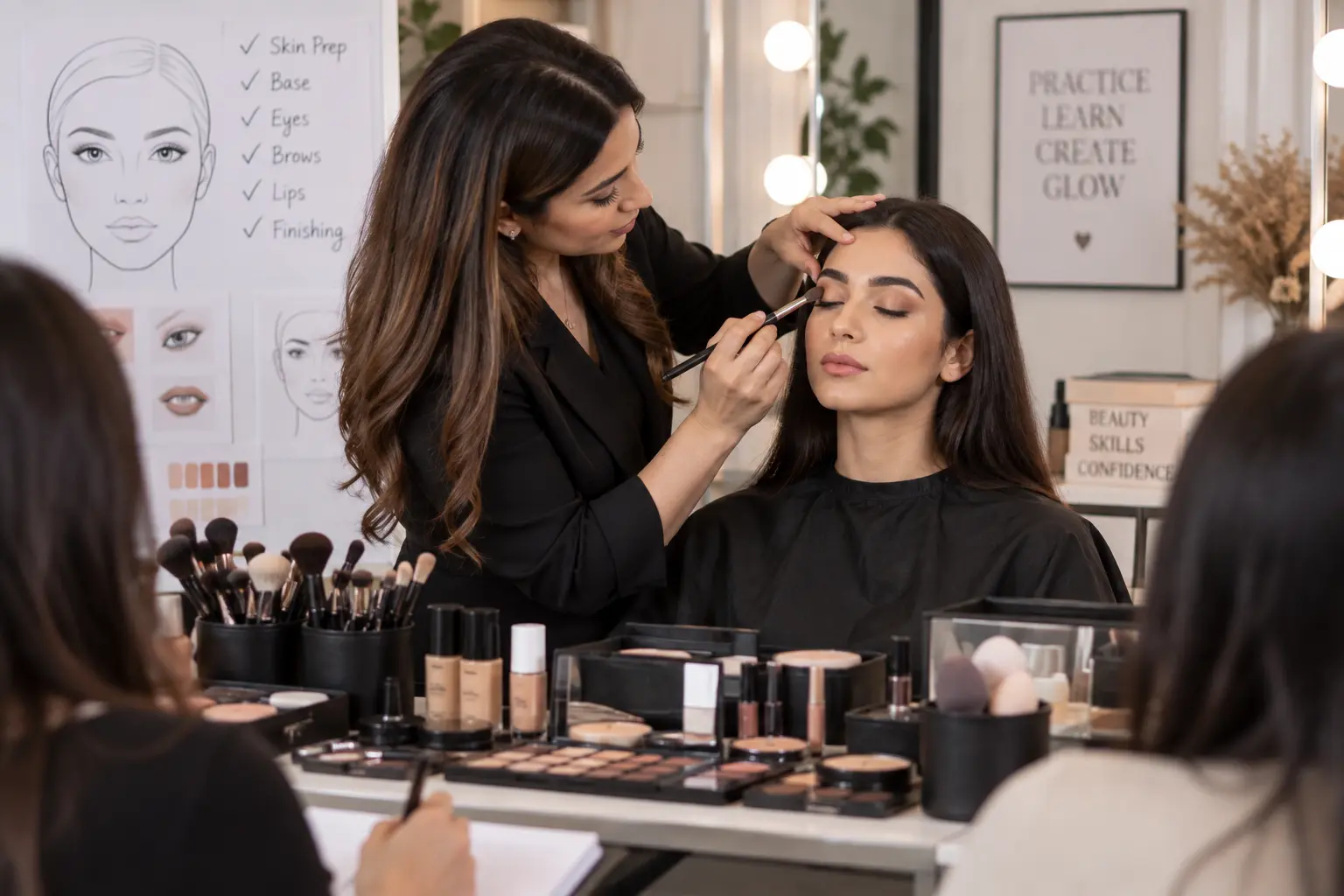
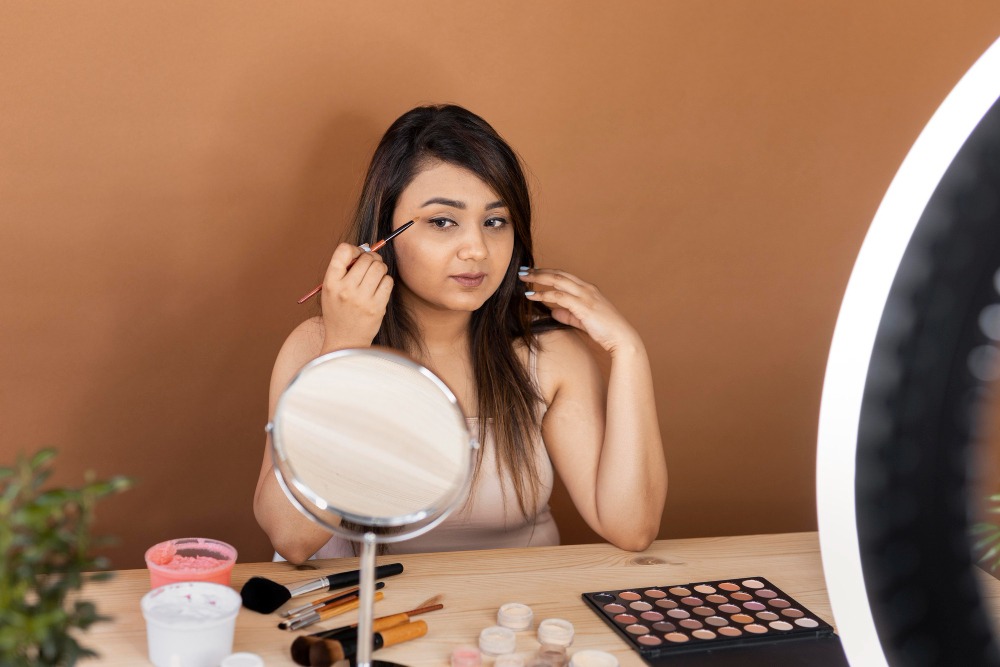
6. Eyeshadow. One light shade across the lid, a medium brown blended into the crease, a slightly darker tone at the outer corner. Blending is what makes this look soft rather than obviously “done.”
7. Eyeliner (optional). A brown pencil, kept close to the lash line, is far more forgiving than black liquid liner while you’re still building confidence. Skip dramatic wings for now.
8. Mascara. Curl lashes first if you like, then apply root to tip in a gentle zigzag. One or two coats is genuinely enough for daytime.
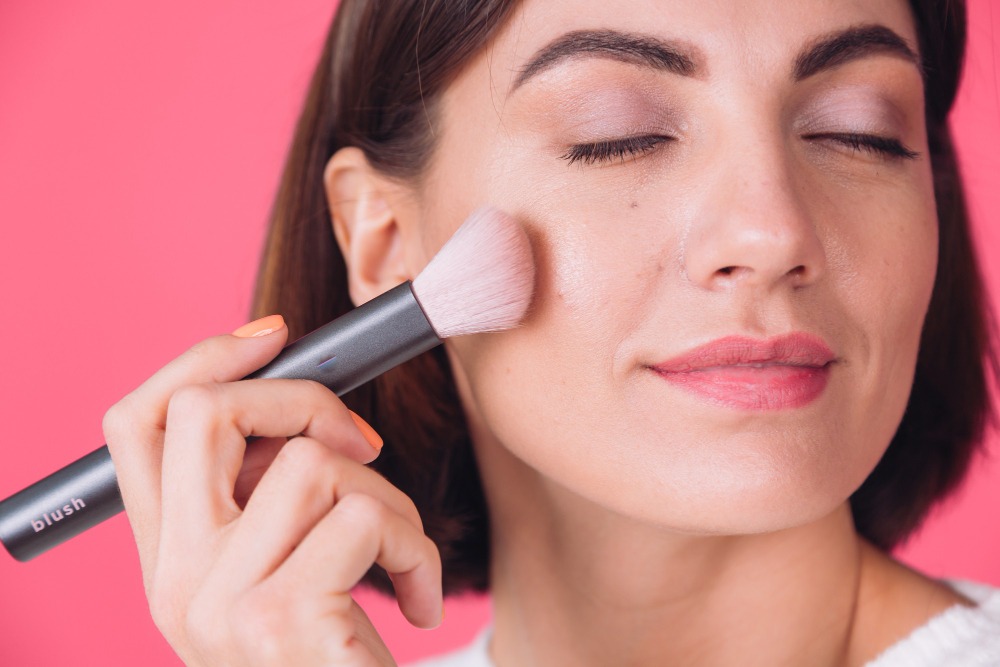
9. Blush. Smile slightly, apply to the apples of the cheeks, blend upward. Cream formulas are the easiest to work with as a beginner.
10. Lips. Nude, pink, a tinted balm, or a gloss — neutral shades pair well with almost any look you’ve just built.
Something we say to every new class: most beginners rush straight from step six into step seven without checking the blend in a mirror under proper light first. Slowing down there is the single habit that speeds everyone up in the long run.
The Ten-Minute Version
Short on time? Moisturiser, primer, BB cream, concealer, powder, brows, mascara, blush, lip tint. That’s a full, polished look in under ten minutes once it’s practised a few times.
Habits That Matter More Than Products
Blend thoroughly — harsh lines are what read as “unfinished,” not lack of product. Match foundation at the jawline, never on the hand. Invest in a few decent brushes rather than a dozen mediocre ones. Learn one technique fully before adding the next. Take makeup off every single night. Wash brushes weekly — this one’s non-negotiable from day one in our practicals.
What We See Every New Intake Get Wrong
Too much foundation · the wrong foundation shade · skipped skincare · heavy-handed powder · overfilled brows · rushed blending · makeup kept well past its shelf life. None of these need a professional fix — just someone pointing them out, which is exactly what a trainer does that a tutorial can’t.
Beyond the Basics
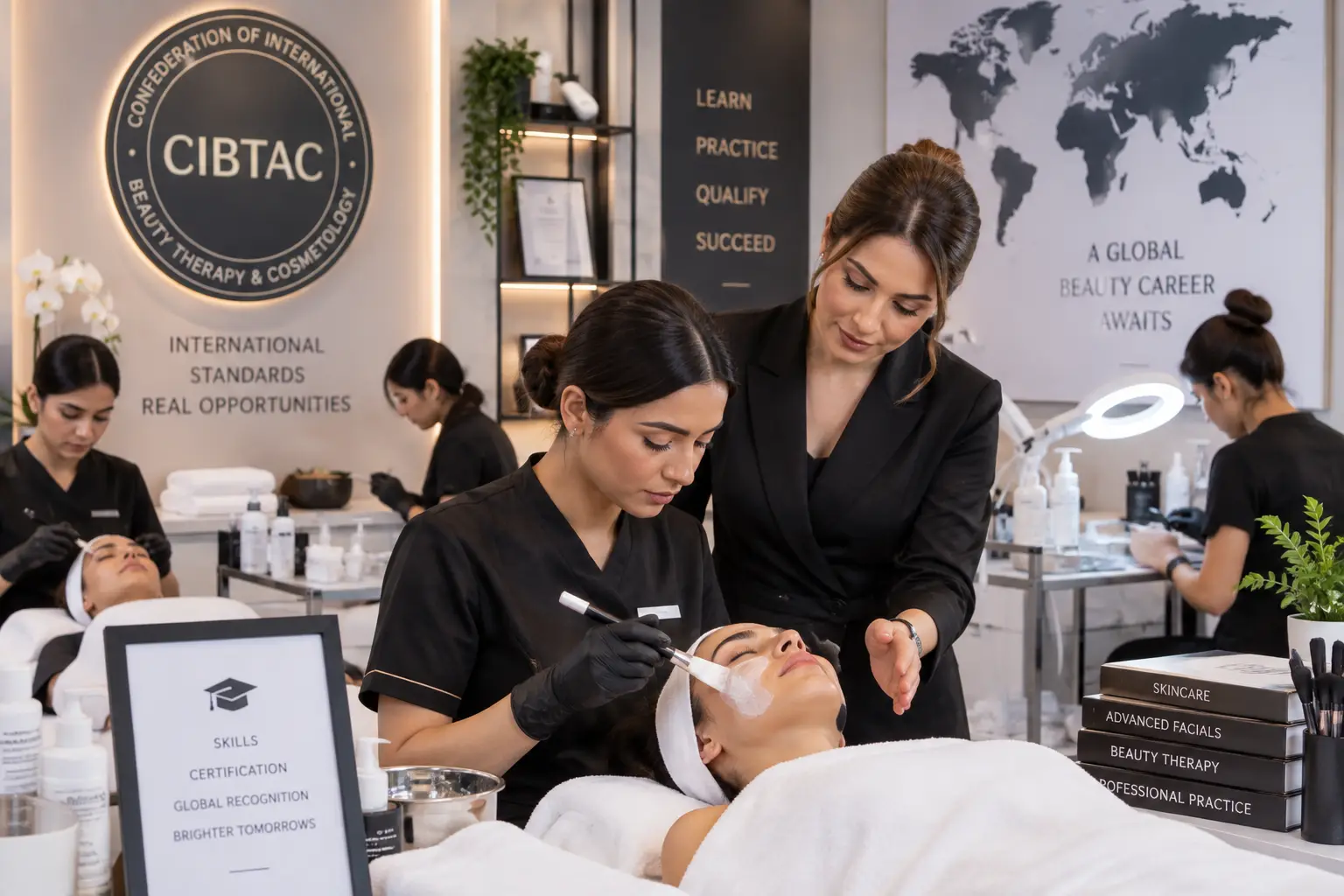
Watching videos genuinely helps, but there’s a ceiling to what they can correct. At Alondra Academy, students move from these fundamentals into skin prep theory, colour correction, bridal and fashion looks, and professional hygiene standards — all inside small practical groups where an instructor is watching your hand, not just your finished photo. You can see what that progression tends to lead to on our Success Stories page.
“I finally understood why my makeup never looked smooth. Learning the actual technique changed my confidence completely.” — Alondra Academy student, after beginner training
From a Ten-Minute Routine to a Career
Plenty of our students start exactly where you are — wanting a routine that gets them out the door with more confidence. Some stop there. Others keep going, and end up working in salons and clinics across the UAE, freelancing on bridal and event bookings, or eventually running their own studios.
If that’s a direction that interests you, our makeup course builds directly on everything in this guide, with small groups and hands-on practice on real models. If skincare and treatments appeal just as much as makeup, our Beauty Therapy Course broadens that foundation into a full beauty qualification, and many graduates go on to our semi-permanent makeup or skin care training afterwards.
Conclusion
Everyone starts as a beginner, and the gap between a shaky first attempt and a confident daily routine is smaller than it feels — mostly a matter of consistent practice and understanding why each step matters, not owning more products. If this turns out to be something you enjoy more than expected, that’s usually the exact moment our students start asking what comes next.
Ready to turn today’s routine into tomorrow’s skill? Talk to our admissions team →
FAQs
What’s the best way to start learning makeup as a complete beginner?
Start with skin prep, then primer, foundation, concealer, powder, brows, eyes, blush, and lips — mastering each stage gradually rather than trying everything at once.
What products should I actually buy first?
Primer, a foundation or BB cream, concealer, powder, blush, mascara, a brow pencil, a neutral eyeshadow palette, a lipstick, and two or three decent brushes or a sponge. Skip everything else until you know you need it.
How do I make my makeup look natural instead of “done”?
Thin layers, shades that genuinely match your skin, and thorough blending at every stage — a simple routine done well outperforms a complicated one done fast.
How long does it take to get comfortable with basic makeup?
Most people feel confident with an everyday routine after a few weeks of regular practice — faster with an instructor correcting mistakes as you go instead of figuring them out alone.
Can I move from beginner basics into a professional career later?
Yes — once the fundamentals are solid, a structured course builds the advanced skills, portfolio, and certification needed for client work. Book a consultation with our team to talk through what that path could look like.
About the Author
Written with Alondra Academy’s practical makeup trainers in Dubai, reflecting real classroom coaching and the mistakes we see most often in beginner practicals — not general research. More on our teaching team is available on our About Us page.